

A few years back, I was sitting in a site office near Pune. The plant manager, who pretty much knew everything, was deeply engaged in a discussion about damages to pumps, which looked as if someone had given them a thorough beating. A tiny welding slag piece that was no bigger than a coin had made its way through a very old and rusted screen and destroyed the high-pressure system. It made no difference to the essence of the matter that the repair bill was around ₹15 lakh; three days of unplanned downtime at the time of peak production were more than the cost of the repair.
He glanced at me and said: “We spend crores of rupees on pumps but treat strainers as an afterthought. That is our mistake, isn’t it?”
He was certainly right. I mean, really, it’s a pattern I too keep noticing all over the Indian industrial sectors. We put our attention mainly on the “glamorous” equipment big turbines, complicated systems of reverse osmosis, high-speed filling lines etc. But we neglect the basket strainer, the “humble” basket strainer. It is the “gatekeeper.” It is the first line of defense. And if you are doing business in India, where the quality of water changes every few meters and supply chains for spare parts can be… how to say it “quite optimistic, ” focusing on Basket Strainer India is not merely a technical choice. It is a decision having a very big implication on one’s business.
Table of Contents
What exactly is a Basket Strainer? (And why “Good Enough” isn’t)
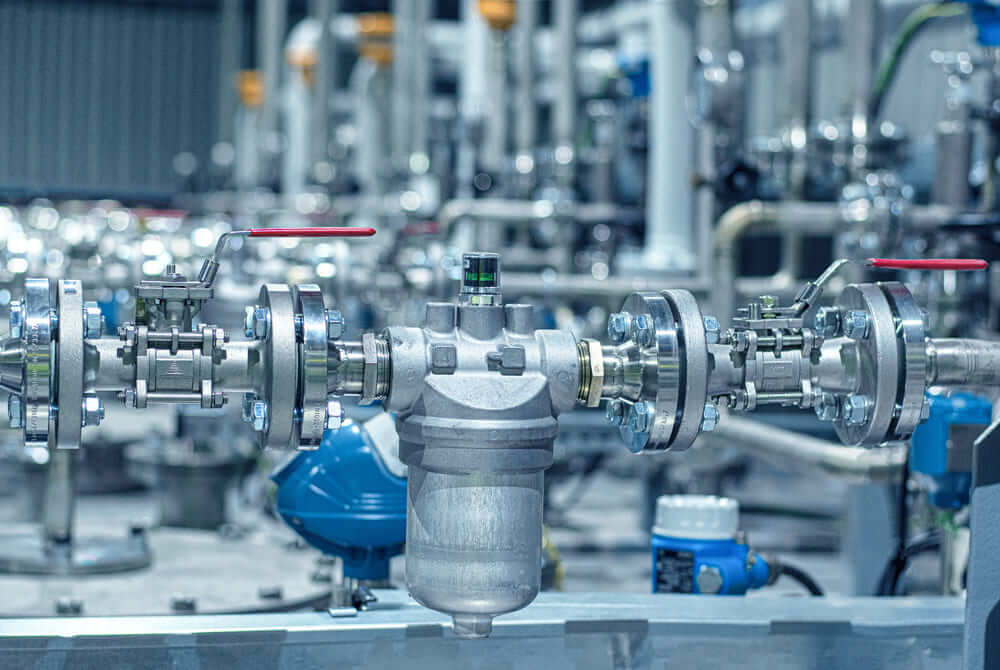
Basically, a basket strainer is a sealed vessel with a removable screen which traps solids from a liquid stream. You can compare it to a huge, industrial-strength kitchen sieve, only this one is made for operating at pressures which would blow up your home plumbing.
However, here is what differentiates these devices: in the case of Basket Strainer India, we are not only dealing with “clean” fluids. Besides that, we have to face silt from the river Ganges, scaling problems due to hard water in Rajasthan and the specific chemical compositions of industrial effluents in the chemical belts of Gujarat.
The Anatomy of Protection
The body of a basket strainer is made of cast iron, carbon steel or stainless steel.
The cover is the lid which can be opened for cleaning (and I must say that how easily you can open it is the most important feature in this matter).
The basket itself is the “heart” of the contraption. It is the mesh or the perforated metal element carrying out the actual filtration.
Honestly, you could purchase a cheap generic strainer. Unfortunately, what usually happens is that the cheap basket collapses under a pressure surge, what is commonly referred to as a “bypass”, and you have turned a protective device into a piece of pipe that does nothing.
The Efficiency Equation: How Filtration Drives Your Bottom Line
In India when we mention “efficiency” at a factory, we normally mean how much power is consumed or labor productivity. We hardly ever think about pressure drop.
What happens is that every time a liquid flows through a strainer, a little bit of its energy is lost. In case your strainer is inefficiently built or gets clogged, your pumps will have to exert themselves more. They will take more power, and finally, your electricity bill will increase. Cumulative effect over a year? That “cheap” strainer just cost you five times its purchase price in wasted energy.
Why Indian Industries Face Unique Filtration Challenges
- Variable Feedstock: The content of impurities in a stream can change drastically in India together with the seasons. For instance, monsoon silt is a nightmare for the guys in filtration.
- Maintenance Culture: Let’s face it, preventive maintenance is frequently the “when we have time” kind of thing. Thus, you’ll require a strainer that can endure a little neglect and won’t immediately fail.
- Cost of Spares: Getting a specially made filter can take weeks if you are importing, so if you are trying to localize Basket Strainer India, you also make sure that you are not waiting for a box from Europe while your plant is idle.
Key Types of Basket Strainers: Simplex vs. Duplex
This is where practical decision making starts. In fact, you only have two options.
1. Simplex Basket Strainers
The thing with these is that you can shut the process down. You just stop the flow, open the lid, take out the basket, clean it, and put it back.
- Perfect for: Batch processing, cooling water lines that have bypasses, or utility lines that aren’t critical.
- The Big Problem: If you aren’t allowed to stop the flow, then you are stuck. I have seen cases where people try cleaning a simplex under pressure… don’t do that. Besides it being dangerous, it’s also a mess.
2. Duplex (Twin) Basket Strainers
This represents the “gold standard” in 24/7 operations. Actually, it is two simplex strainers linked together by means of a diverter valve. When the basket on one side becomes full, all you need to do is to flip a lever, the flow is diverted to the clean side, and you can carry out the service work on the dirty side while the pump is still running.
- The Winner: These pumps are for the chemical factories, oil refineries, and power plants that run without stopping.
- The Charge: Not only are they bigger and heavier, but that also means that they cost more. However, the cost of shutting down a factory is so high that they repay their cost after the first shift.
Material Selection: Avoiding the Corrosion Trap
Until this time, the choice of wrong metallurgy only for saving 10% of the initial cost is, I believe, the biggest error that a Basket Strainer India purchaser can make.
In case your plant is situated on a shoreline in Chennai, Cast Iron will turn into a rusty heap within eighteen months without any doubt. Here you will require Bronze or Duplex Stainless Steel. On the other hand, if you are just straining lubricating oil, Stainless Steel 316 may be overkill.
Common Materials and Their “Best Use” Cases:
- Cast Iron: Works well with water and oil where the pressure is relatively low. It’s cheap and reliable but also brittle.
- Carbon Steel: This is the main material used in the oil and gas sector.
- Stainless Steel (304/316): For food, pharma, and corrosive chemicals, the use of these is necessary.
- Special Alloys (Monel/Hastelloy): For very strong acids and similar substances.
The “Dirty” Truth About Mesh and Micron Ratings
When we talk about “Microns” it is very technical but simply means the size of the holes.
- If it’s too coarse, then no one can stop debris from getting through and damaging your equipment.
- If it’s too fine, then the strainer will clogg almost immediately, and your maintenance team will be looking for other jobs.
Basically, for mesh size, it’s all about the “Ratio of Open Area”. In fact, a good mesh in the industrial strainer should have a ratio of at least 6:1, which means that the total area of holes in the basket is six times the area of the pipe. This is so important because it leads to “dirt loading capacity.” This means that even if the strainer is 50% dirty, that flow won’t be significantly affected.
My suggestion is to always install a Differential Pressure (DP) gauge across your strainer. It is just a simple dial and it shows you exactly how “full” your basket is. No more guessing. You start measuring.
Sourcing Wisely: What to Look for in an Indian Supplier
You have made up your mind on purchasing Basket Strainer India. But the question is whom do you really trust? This market is swimming with “fabricators” that consider a strainer to be nothing more than a bucket in a box. But reality is different.
1. Certification and Standards
Does the manufacturer comply with ASME Section VIII? Are they ISO certified? We have many highly skilled local manufacturers in India, but you must be sure that they are not compromising the quality of welding or the thickness of the flange.
2. The “Ease of Maintenance” Test
Pretend that you are a prospective customer and inquire: “Is it possible for one person to open this lid without using a 4-foot pipe wrench?” If you get a “maybe” answer, leave the premises. Always opt for Quick-Opening Covers (like yoke covers or swing bolts). After working all day in scorching Indian summer, your technicians will most certainly thank you for not making them fight with 20 rusted bolts.
3. Customization Capability
You can get standard sizes but your piping layout may be… different. Maybe you want a side-entry/bottom-exit configuration. If you have a dependable Indian partner, he should be able to do the design changes without charging the “custom-engineering” fee to you that the MNCs usually do.
Installation and Maintenance: Don’t Set It and Forget It
The strainer is here. It’s beautiful. The color is that perfect industrial blue. You have screwed the bolts. Done, right?
Wrong.
The very first 48 hours after new plant start-up is the time when a strainer really earns its keep. During this period, so-called “construction debris”, the pieces of cloth, the welding rods, the lunch wrappers (yes, I have found them), are thoroughly flushed through the pipes.
My “Golden Rules” for Maintenance:
- Keep a basket clean both early and frequently during the first week of operation.
- Never use a damaged basket. A small rip in the mesh is similar to a hole in the dam. Only bigger it.
- Always have spare gaskets. I can’t tell you how many times I have seen factories being shutdown due to a leaking ₹500 O-ring and there was no spare.
Future-Proofing: Automation and Smart Filtration
Even in our traditional sectors, we are stepping into Industry 4.0. More and more Indian companies are going for Self-Cleaning Strainers, which clean the screen automatically by means of a motorized brush or backwash arm based on timer or pressure sensor.
Costlier? Yes, definitely. But please consider that if your labor costs are rising or your process is too sensitive for manual intervention, this is the logical step for serious Basket Strainer India installations. It removes the element of “human error” when, for instance, a basket isn’t cleaned until a pump cavitates.
Final Thoughts: The Insurance Policy for Your Pipes
Basically, a basket strainer is like insurance. You don’t take out insurance because you wish to use it; you take the insurance because the “what if” is prohibitively expensive to ignore.
In the Indian industrial environment, where profits are minimal and uptime is life, not paying attention to your filtration strategy is almost… well, it’s suicidal. It’s risking the life of your equipment.
Frankly, in my opinion, we should stop viewing them as simple “pipe parts.” These are very precise tools engineered to maintain the rhythm of your plant. Whether it is a textile mill in Surat, a pharmaceutical laboratory in Hyderabad, or a dairy in Anand, the principle stands: Protect your downstream. Get high-quality Basket Strainer India. Choose the right material. Mesh the correct size. And for goodness sake, don’t overlook a DP gauge. Your pumps, and your CFO will be grateful.
In fact, it seems to me that in a world where we all are trying to do more with less, keeping the “junk” out of the system is the most straightforward Victory you’ll have this year. Don’t wait for a broken impeller to prove me right.
Summary Checklist for Sourcing:
- Application: Simplex (intermittent) or Duplex (continuous)?
- Material: Is it compatible with the fluid and the environment?
- Sizing: Is the open area ratio at least 6:1?
- Maintenance: Can the cover be removed quickly?
- Supplier: Do they provide material test reports and pressure test certificates?
A good supplier can be a source of reassurance that all these boxes can be checked, and when that happens, you don’t simply get a strainer; what you get is peace of mind. And, trust me, that’s worth its weight in stainless steel in this business.
Frequently Asked Questions (FAQs)
Usually, by the time we have read through a guide, we think we have everything covered. But then, standing on a factory floor, looking at a specification sheet, we start doubting ourselves. I have had those exact conversations when we were having tea at various workplaces. Below are the Basket Strainer India real-life questions:
1. How do I know if I need a Simplex or a Duplex strainer?
Actually, this comes down very simply to one question: Can you afford to stop the flow? If your process is like a heart, it cannot stop beating even for ten minutes, then a Duplex is what you need. Since it has two chambers, when you service the one, you switch to the clean one. When you have a standby pump or a bypass line to divert water for 20 minutes of cleaning, then a Simplex is sufficient and more cost-effective.
2. What is the “Rule of Thumb” for choosing a mesh size?
I mean, everyone wants such filtration that goes to one micron, but there is a “catch.” A good guideline is to pick a mesh that is around 50% of the dimension of the smallest particle you want to get rid of. If you want to protect a spray nozzle with a 2mm opening, don’t use a 2mm mesh; use a 1mm mesh. Just contemplate this: The finer the mesh, the more often you will end up cleaning it. It’s a compromise.
3. Can I use a Y-Strainer instead of a Basket Strainer?
Yes, it is possible, but is this a wise choice? Y-strainers work well with high-pressure steam lines where there’s very little debris. But when it comes to liquids containing a lot of heavy solids, the “dirt pocket” of a Y-strainer is so limited that it clogs really fast. In terms of holding capacity, a Basket Strainer India is way ahead. And cleaning a Y-strainer almost always means getting splashed with whatever fluid is left in the pipe, a guarantee for no happy afternoon.
4. Why is the pressure drop (ΔP) so important?
Think of pressure drop as the straining energy being lost. Every PSI or Bar lost across a strainer is energy that your pump must work harder to generate. If your ΔP is very high even before you start, then your strainer is a clear case of being undersized. You want to have a sufficiently low clean pressure drop to allow a rising drop as the basket is filling up with refuse.
5. How often should I replace the internal basket?
With proper care, you should be good for many years. However, there are instances of baskets that look like an elephant has just trod on them due to an excessively high pressure differential that led to the collapse of the mesh. Replace it immediately if the mesh is torn or the frame is warped. Otherwise, you just have a very costly and heavy pipe piece that is not serving any function.
6. Are local Indian brands as good as imported ones?
To be honest, yes, if you choose a reputable manufacturer.
India has become a global hub for high-quality casting and fabrication. You can get the same ASME-grade quality locally for a fraction of the cost and, more importantly, with much faster lead times for spare baskets and gaskets. Just do your due diligence on their testing facilities.

